

by John Geiger
To answer that, let’s start upstream of the tower – at the water plant where groundwater and surface water are blended together and disinfected with chlorine to maintain consistent water quality and great taste. After treatment, booster pumps move water through the distribution system and into one of five raised water towers around The Woodlands (a 6th will begin construction in fall of 2026). The towers are owned and operated by our partner, the San Jacinto River Authority (SJRA), and stand up to 150 feet tall.
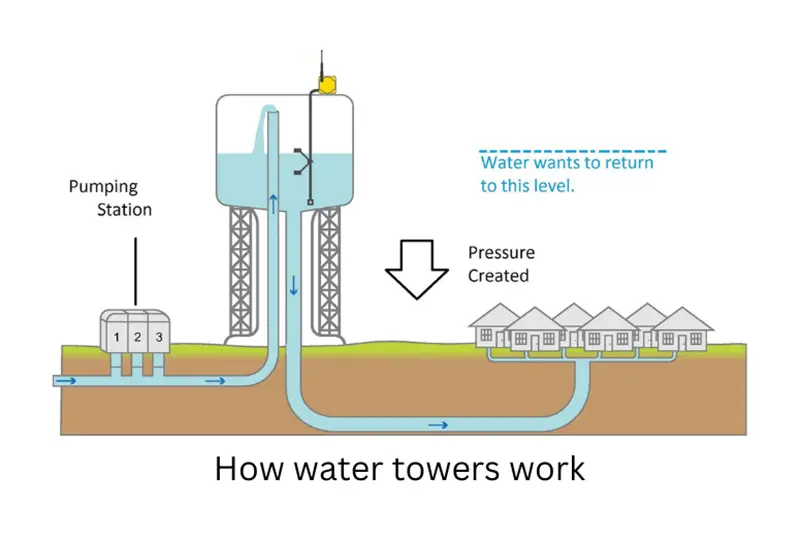
Here’s how they work: pumps push potable water up into a large tank atop the tower, enabling gravity to work its magic. For every 1 foot of elevation, the tower provides .43 psi of water. So, a 100-foot water level creates 43 psi — which is why they’re built so tall.
A tower has a single pipe connecting it to the water system, and all water flows back and forth through that one pipe. The towers are never truly empty — they “float” on the system. When the water system has an excess of pressure from a pump running, water is forced into the tower. When the pump isn’t running and there’s water demand, water flows out of the tower through that same pipe. In other words: when pressure drops, water flows out; when pressure rises, water flows in; and when pressure is balanced, the water stays put.
This clever, largely passive system maintains constant water pressure in the distribution system regardless of demand fluctuations — guaranteeing consistent water availability for everyday needs, unusually high demand, and even emergencies where the booster pumps lose power.